Welcome to Dölken Lab at the MHH
Systems and RNA Biology of Herpesvirus Infections
The Dölken Lab at Hannover Medical School (MHH) explores the intricate co-evolution between herpesviruses and their hosts. While these large DNA viruses are significant human pathogens—causing everything from common cold sores to cancer—they also serve as powerful tools for uncovering fundamental principles of cell biology and immunology.
Beyond the Tip of the Iceberg
Because herpesviruses interfere with complex cellular signaling networks, we employ a systems-level approach to resolve the full spectrum and complexity of virus-host interactions. Our research moves from single-cell to organismal levels, focusing on three core pillars:
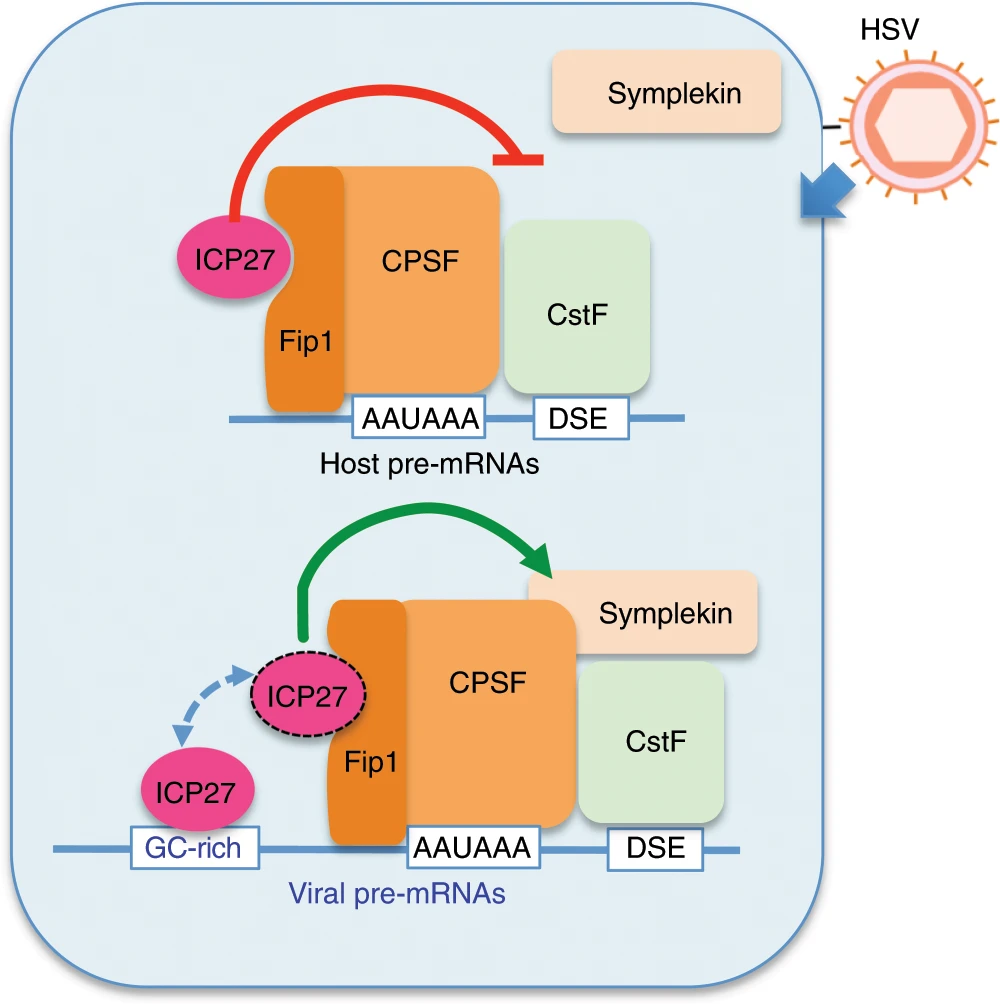
Manipulation of the Host Transcriptional Machinery: We use innovative 4sU-tagging (metabolic labeling) to capture real-time changes in RNA synthesis, processing, and decay at bulk and single-cell level. This allows us to study how viruses like HSV-1 disrupt cellular processes, such as transcription termination, to evade host defenses.
Functional Genome Re-annotation: By integrating RNA-seq and ribosome profiling (Ribo-seq), we discovered that herpesvirus genomes are far more complex than previously thought. We are currently re-annotating these genomes to include hundreds of novel transcripts and small open reading frames (sORFs) that regulate viral adaptation.
Single-Cell Dynamics (scSLAM-seq): To overcome the limitations of standard single-cell sequencing, we pioneered scSLAM-seq. By combining metabolic labeling with chemical conversion, we can differentiate between “new” and “old” RNA within a single cell for thousands of genes in thousands of individual cells. This “super-resolution” view will enable us to decipher stochastic virus-host interactions during latency, reactivation, and productive infection.
Recent News
| Date | Title | Categories |
|---|---|---|
| Wednesday, May 20, 2026 | Patrick Fischer successfully defends doctoral thesis | News; Thesis |
| Tuesday, February 10, 2026 | Dölken Lab is now ONline | Updates |